And Why That Matters for Your Garden Room
When choosing a garden room, most people focus on the finished appearance. The cladding, glazing, flooring and interior design naturally take centre stage.
But what you don’t see is often the most important part of the building.
The structural frame determines how your garden room performs not just on the day it’s installed, but ten, twenty or even fifty years later.
What Is Warping?
Warping is when a material changes shape over time.
Timber naturally expands and contracts as moisture levels change throughout the seasons. As wood absorbs moisture it swells. As it dries it shrinks.
This continual movement can eventually lead to:
- Twisting
- Bowing
- Bending
- Cupping
- Movement around doors and windows
- Uneven walls and ceilings
Even high-quality timber experiences movement because it is a natural material.
Dictionary Definitaion
“to bend or twist out of shape, especially from a straight or flat form, as timbers or flooring”
Why does steel not warp?
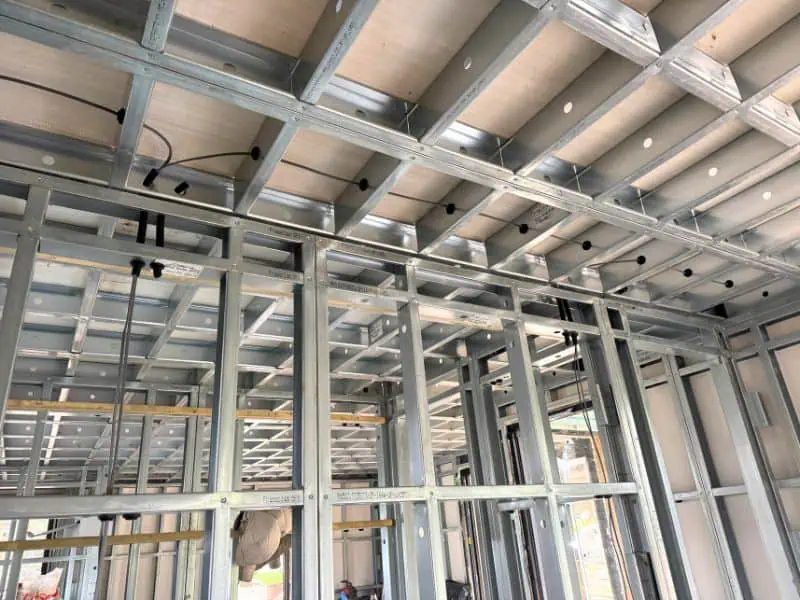
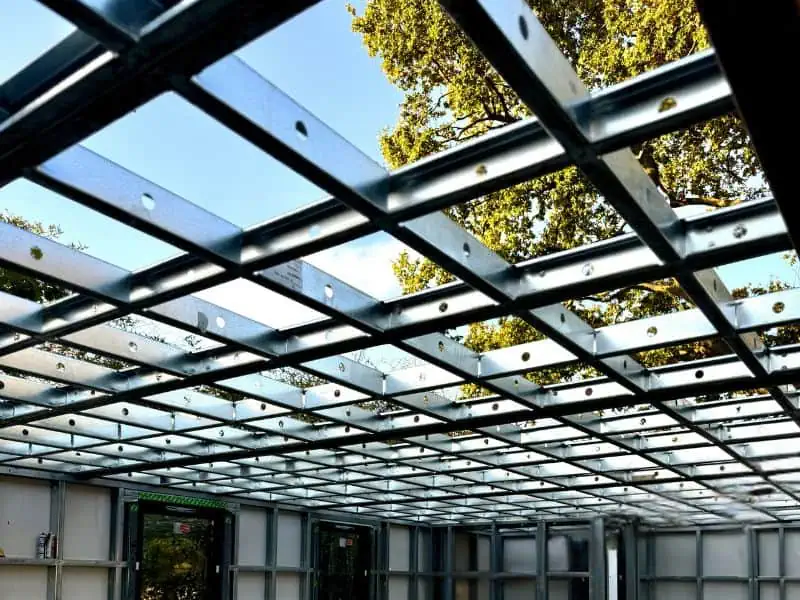
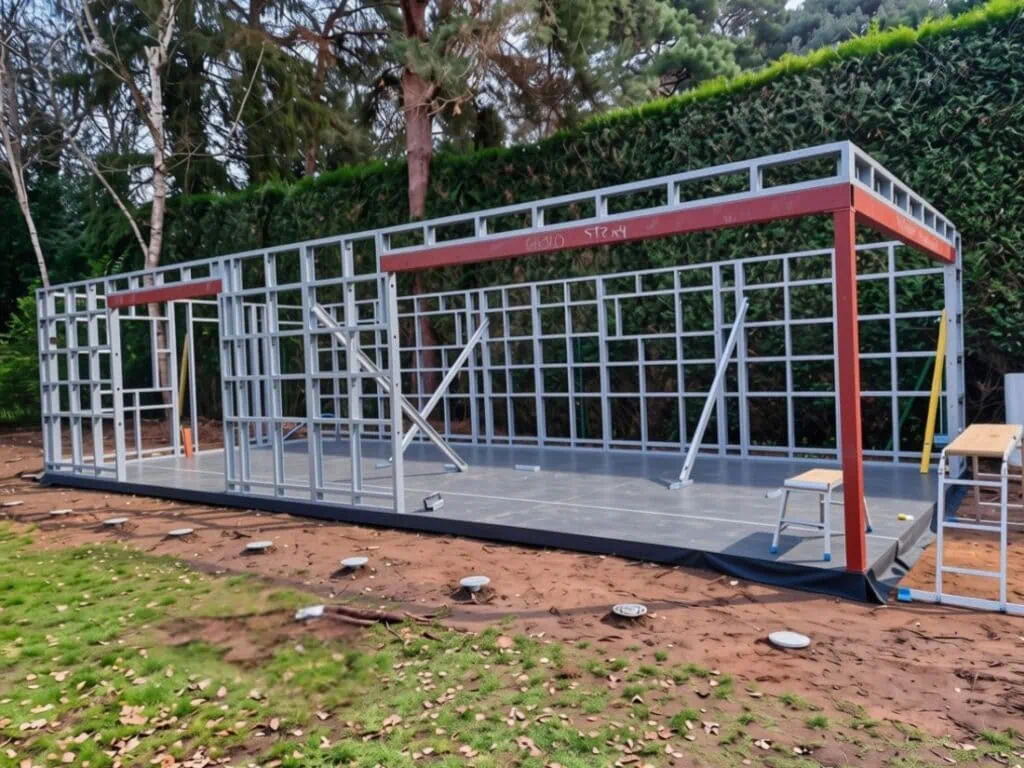
Steel is dimensionally stable.
Unlike timber, steel does not absorb moisture from the atmosphere, so its size and shape remain consistent regardless of humidity or seasonal weather.
This means the frame stays exactly where it was designed to be.
The result is a building that maintains its structural accuracy year after year.
Built in the UK Weather
Building a garden room in the UK means working with the weather, not against it.
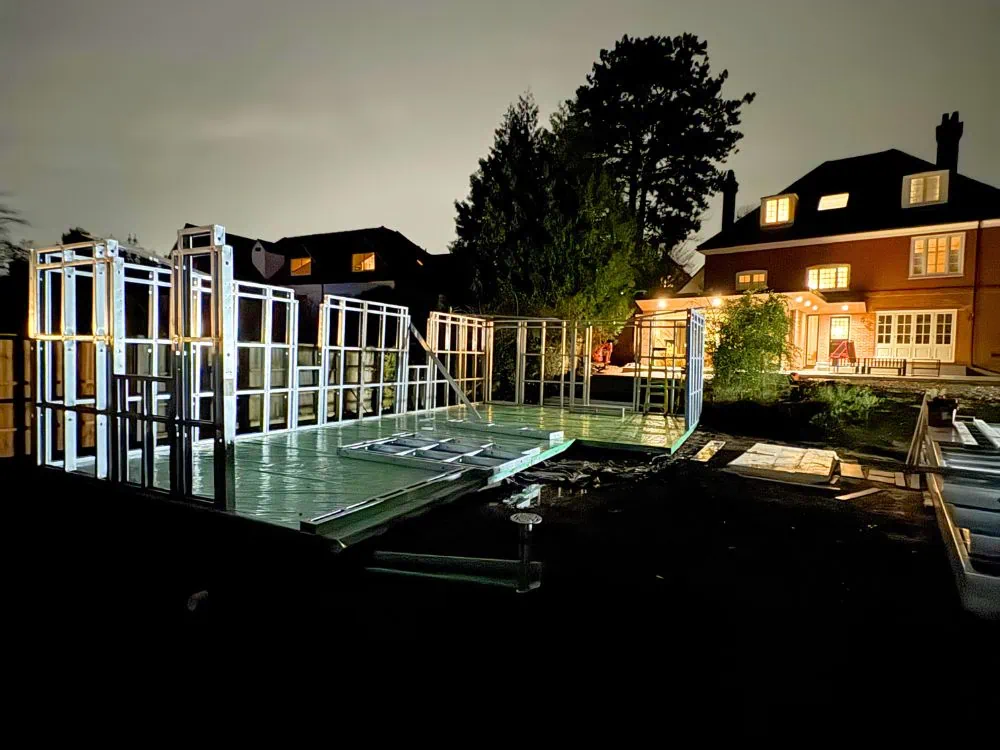
Even with careful planning, it’s common for a structure to experience rain before the roof, insulation and external cladding are fully installed. During this stage of construction, the structural frame is exposed to the elements.
For a steel frame, this isn’t a concern. Steel is dimensionally stable and does not absorb moisture, so getting caught in a rain shower has no effect on its shape or structural performance.
Timber is different.
Because timber is a natural material, it absorbs water when exposed to prolonged wet conditions. As it takes on moisture, it can swell and move. If that moisture becomes trapped and the timber cannot dry out properly, it can also create conditions where fungal decay or mould may develop over time.
While professional builders take every precaution to protect materials during construction, the reality is that British weather is unpredictable. Choosing a steel frame removes this particular risk entirely, providing complete confidence that the structure itself cannot absorb moisture during the build.
Once enclosed, your garden room starts life with a frame that remains straight, stable and dimensionally accurate, regardless of the weather it experienced during construction.
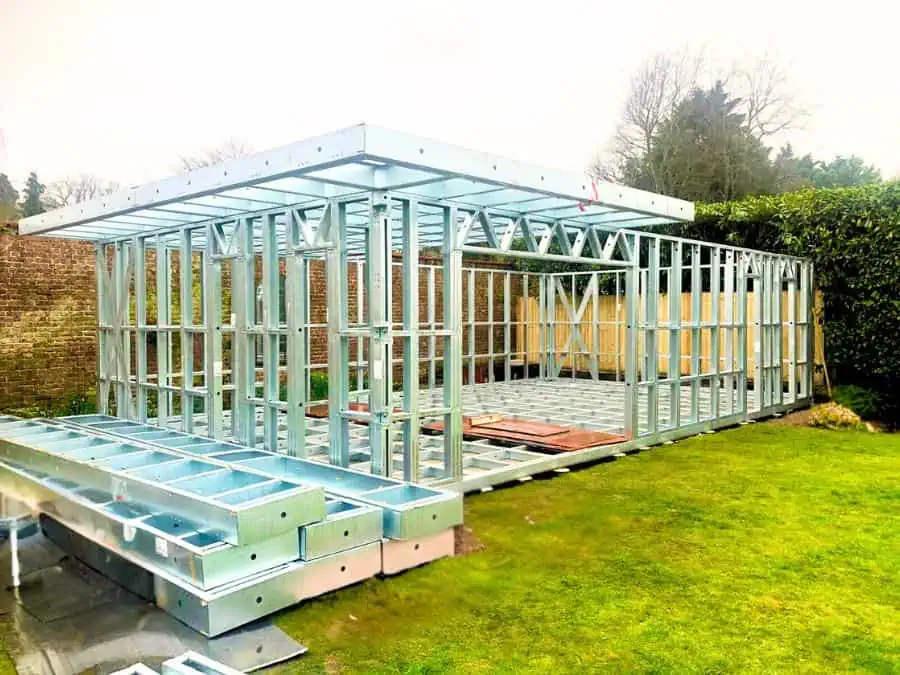
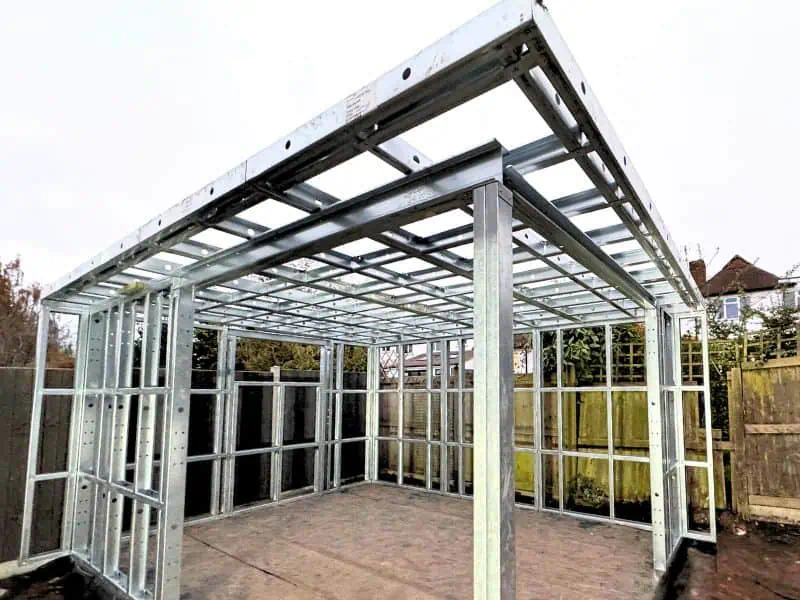
Built Differently: The Strength of Steel Frame Construction
One of the biggest differences between a premium garden room and a basic outbuilding is the interior finish.
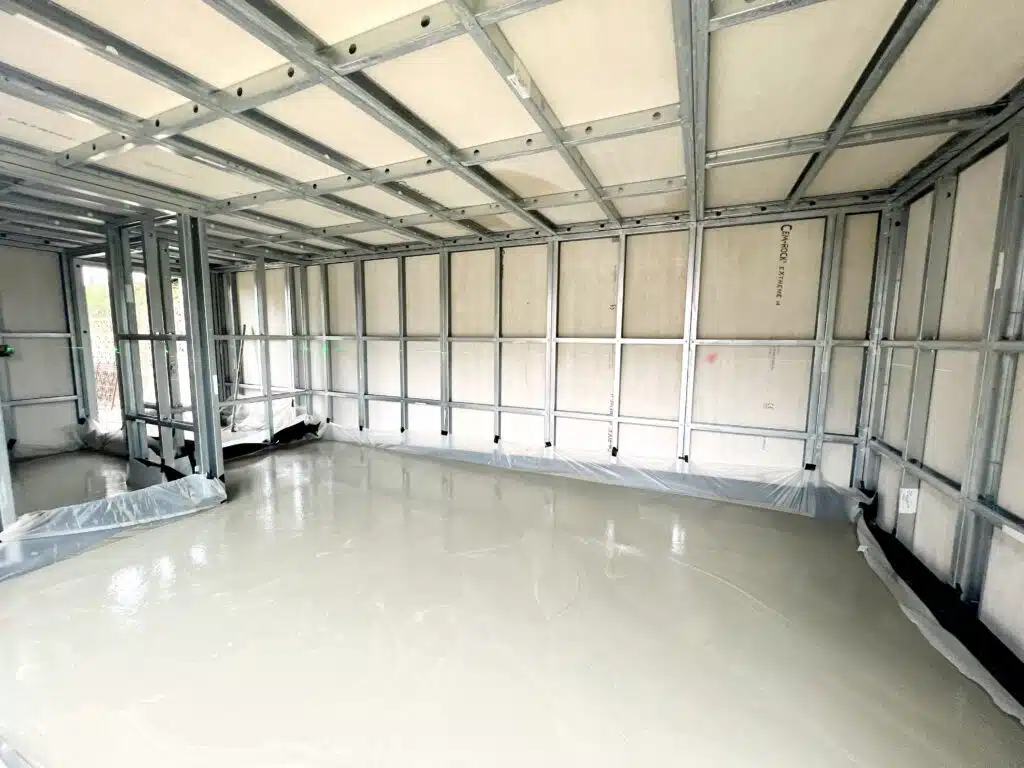
At InFrame, every garden room features fully plastered and painted walls and ceilings, creating a space that feels like a natural extension of your home rather than an insulated shed.
However, achieving this high-quality finish relies on one crucial factor: structural stability.
Plaster is a rigid finish. If the structure beneath it moves, even by a small amount, that movement can transfer through the plasterboard and result in visible cracks around joints, corners and ceilings. That’s why a dimensionally stable frame is so important.
Because steel frames are precision-engineered and doesn’t absorb moisture or warp like timber, it provides a solid, stable foundation for plastered walls. The result is crisp lines, smooth finishes and an interior that continues to look as good years after installation as it did on day one.
Some garden room manufacturers choose decorative wall panel systems, such as melamine-faced boards, instead of plastered finishes. These systems can offer practical benefits, including faster installation and eliminating the need for decorating. They can also be more accommodating of small amounts of structural movement because joints and trims can conceal minor changes more effectively than a continuous plastered surface.
Which is better?
If you believe a luxury garden room should feel every bit as refined as the rest of your home then you will look for a plastered and painted finish. Steel allows for confident delivery of the seamless plastered interiors that define a truly premium living space.
The difference you can notice
If buildings start to warp you will notice the following
- Doors becoming difficult to open or close
- Windows falling out of alignment
- Cracking around plasterboard joints
- Visible movement in internal finishes
- Cladding becoming uneven
- Gaps appearing around glazing
Steel vs Timber
| Feature | Steel Frame | Timber Frame |
|---|---|---|
| Absorbs moisture | No | Yes |
| Seasonal expansion and contraction | Minimal | Significant |
| Risk of warping | Extremely low | Natural characteristic |
| Dimensional stability | Excellent | Varies with moisture content |
| Door and window alignment | Remains consistent | Can move over time |
| Suitable for large glazed openings | Excellent | More structural movement |
| Maintenance related to structural movement | Very low | Higher potential over the building’s life |
| Precision manufacturing | Factory engineered to exact tolerances | Dependent on timber quality and moisture content |
Better for Modern Architecture
One of the reasons architects increasingly specify steel is because it allows modern designs to remain modern.
Clean lines only stay clean if the structure beneath them stays stable.
Large panes of glass only continue to operate smoothly if the openings remain square.
Slim aluminium frames only perform properly when they’re supported by an equally precise structure.
Steel delivers that accuracy from day one and helps maintain it for decades.
Expert Advice
Why we build out of steel
We believe the structure should be every bit as impressive as the finished building.
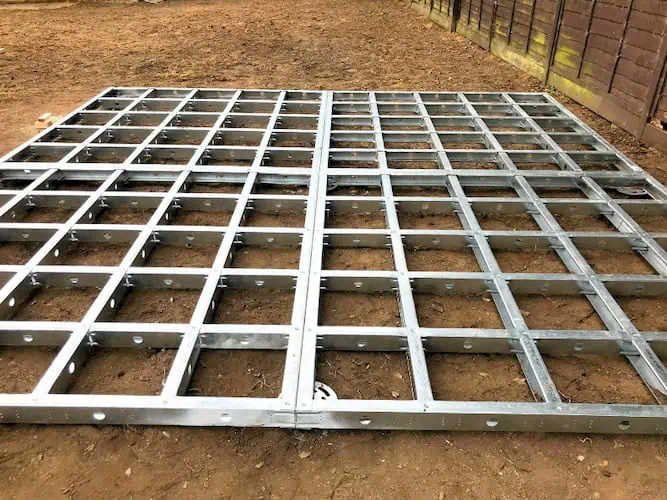
Our precision-engineered steel frame system provides the strength, stability and dimensional accuracy that luxury garden rooms deserve.
Combined with ground screw foundations, high-performance insulation and premium external finishes, it creates a building designed for exceptional long-term performance.
Because true quality starts with what you can’t see.
High-quality kiln-dried timber can reduce movement, but it cannot eliminate it. Wood is a natural material that will always respond to changes in moisture levels.
Yes. Steel has a much higher strength-to-weight ratio than timber, allowing for wider openings, slimmer structural sections, larger bifold doors, bigger corner glazing, higher ceilings and more open-plan interiors without compromising structural integrity.
A dimensionally stable steel frame helps maintain accurate openings, reducing the likelihood of doors and windows going out of alignment over time.
For structural stability, precision and resistance to warping, steel offers significant long-term advantages over traditional timber framing, making it an ideal choice for premium garden rooms.
The British climate places constant demands on buildings.
Rain.
Humidity.
Cold winters.
Warm summers.
These continual changes cause timber to move as moisture levels rise and fall.
Steel is unaffected by these seasonal moisture cycles, giving homeowners greater confidence that their garden room will continue to perform as intended year after year.
One of the reasons architects increasingly specify steel is because it allows modern designs to remain modern.
Clean lines only stay clean if the structure beneath them stays stable.
Large panes of glass only continue to operate smoothly if the openings remain square.
Slim aluminium frames only perform properly when they're supported by an equally precise structure.
Steel delivers that accuracy from day one and helps maintain it for decades.
A garden room isn't just a shed with insulation.
Modern garden rooms often include:
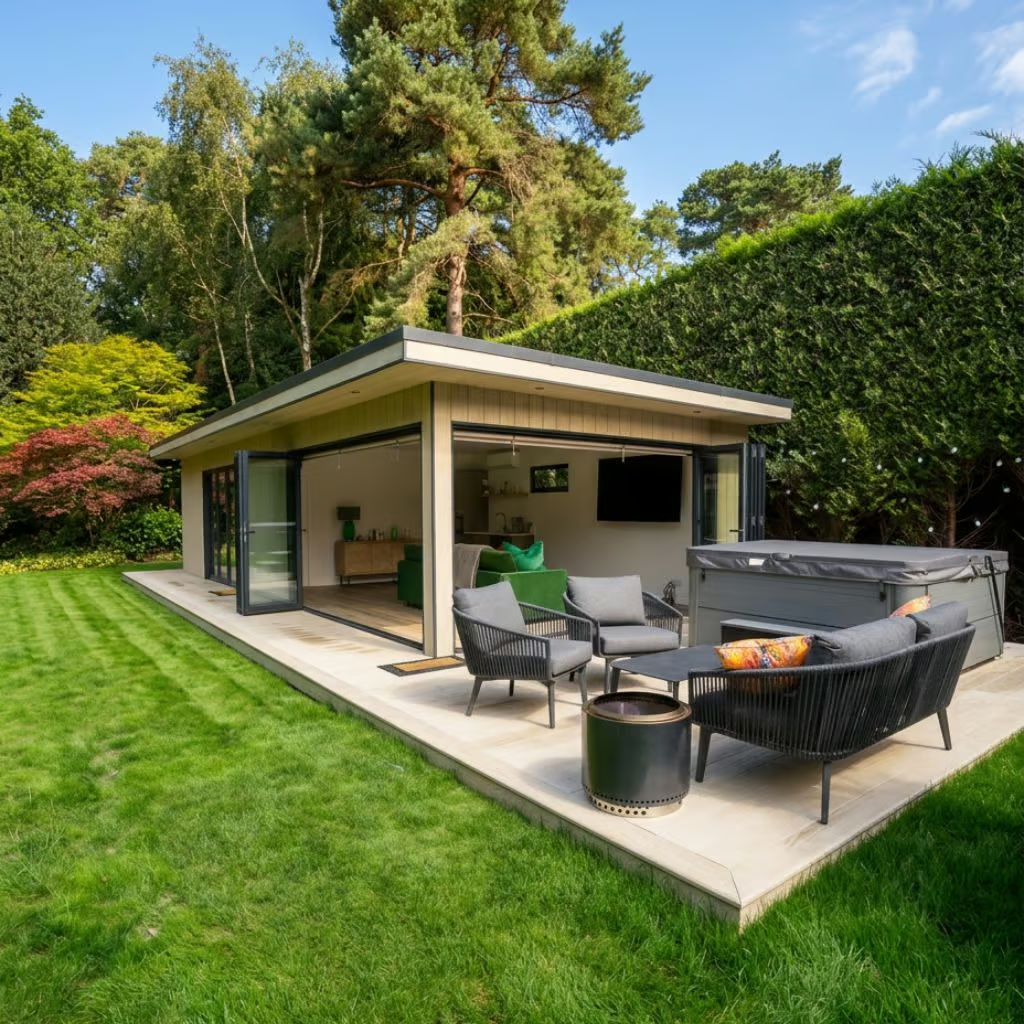
- Large bifold doors
- Floor-to-ceiling glazing
- Slim aluminium frames
- Precision-fitted cladding
- High-performance insulation
- Internal plastered finishes
All of these rely on the structure remaining perfectly true.
If the frame moves, everything attached to it can be affected.
Steel provides a stable foundation that helps protect the performance of the entire building.