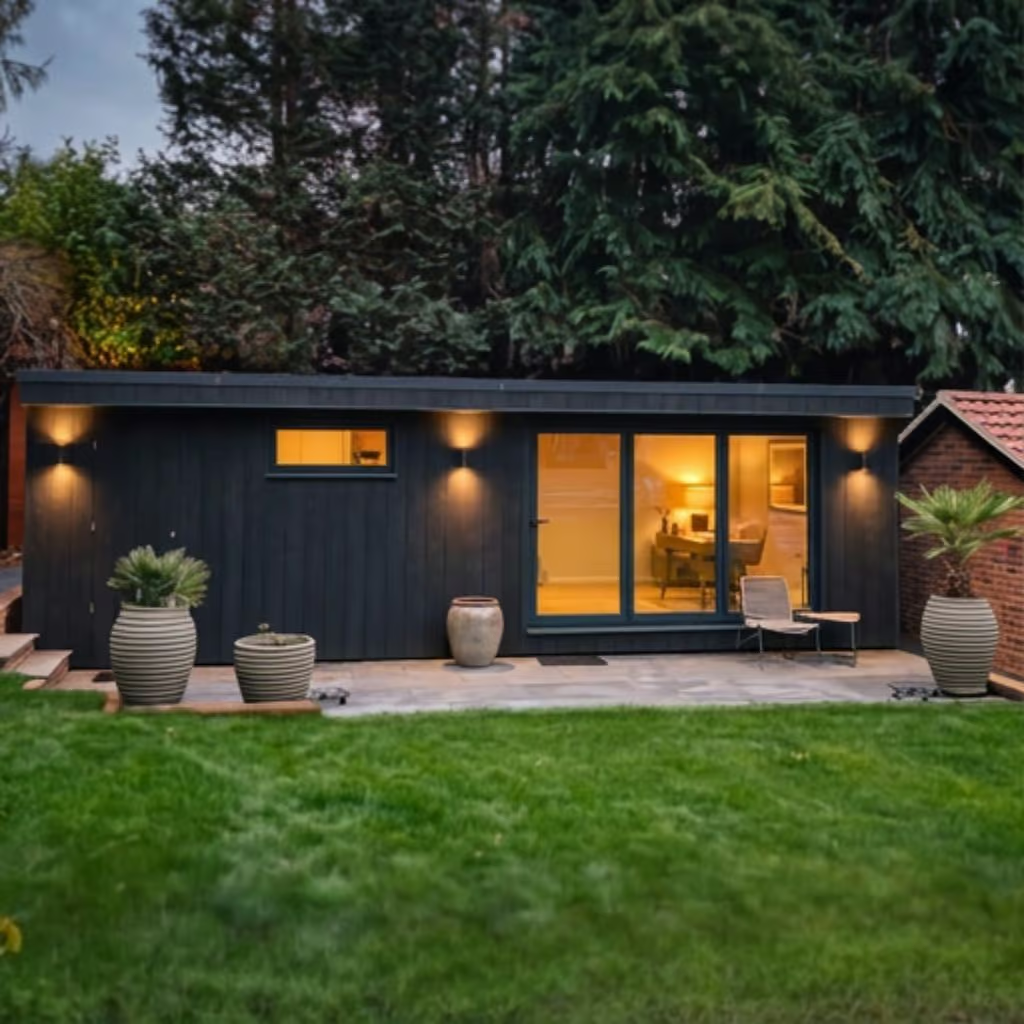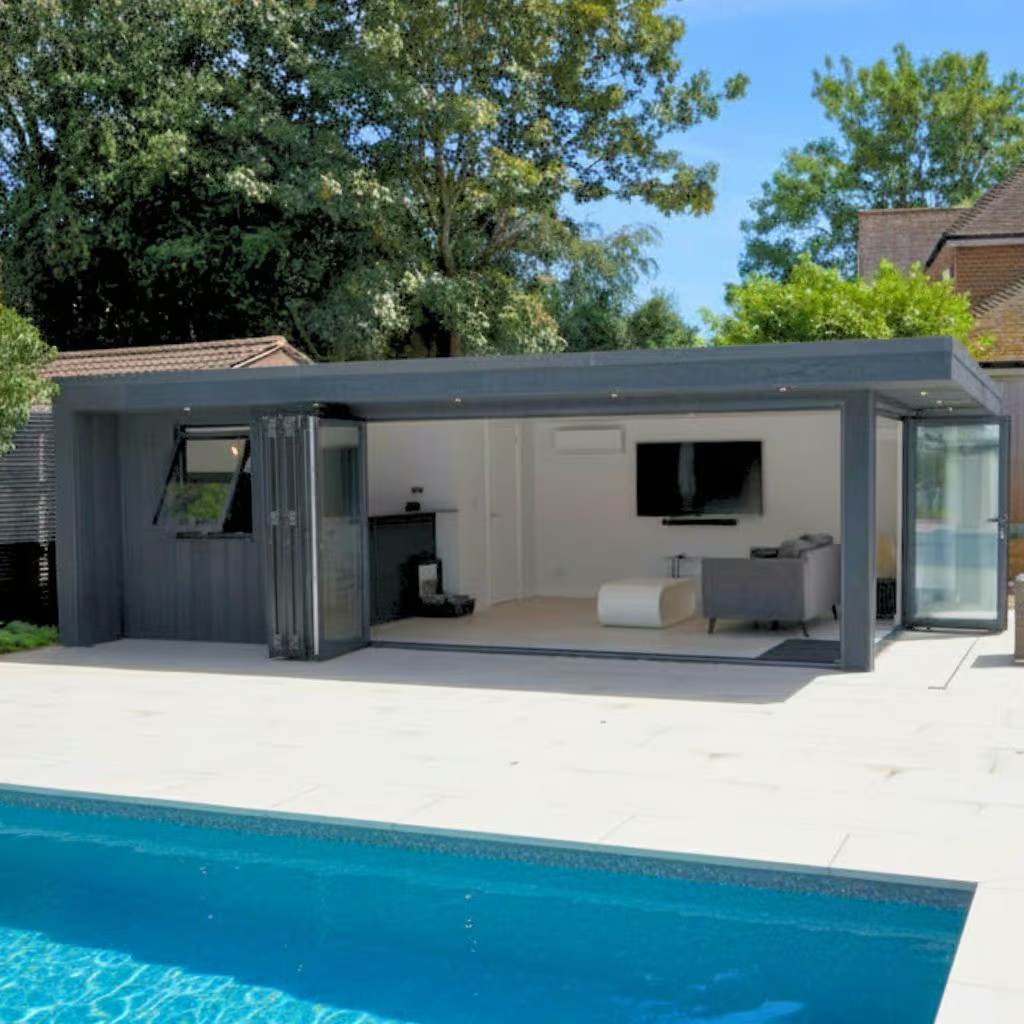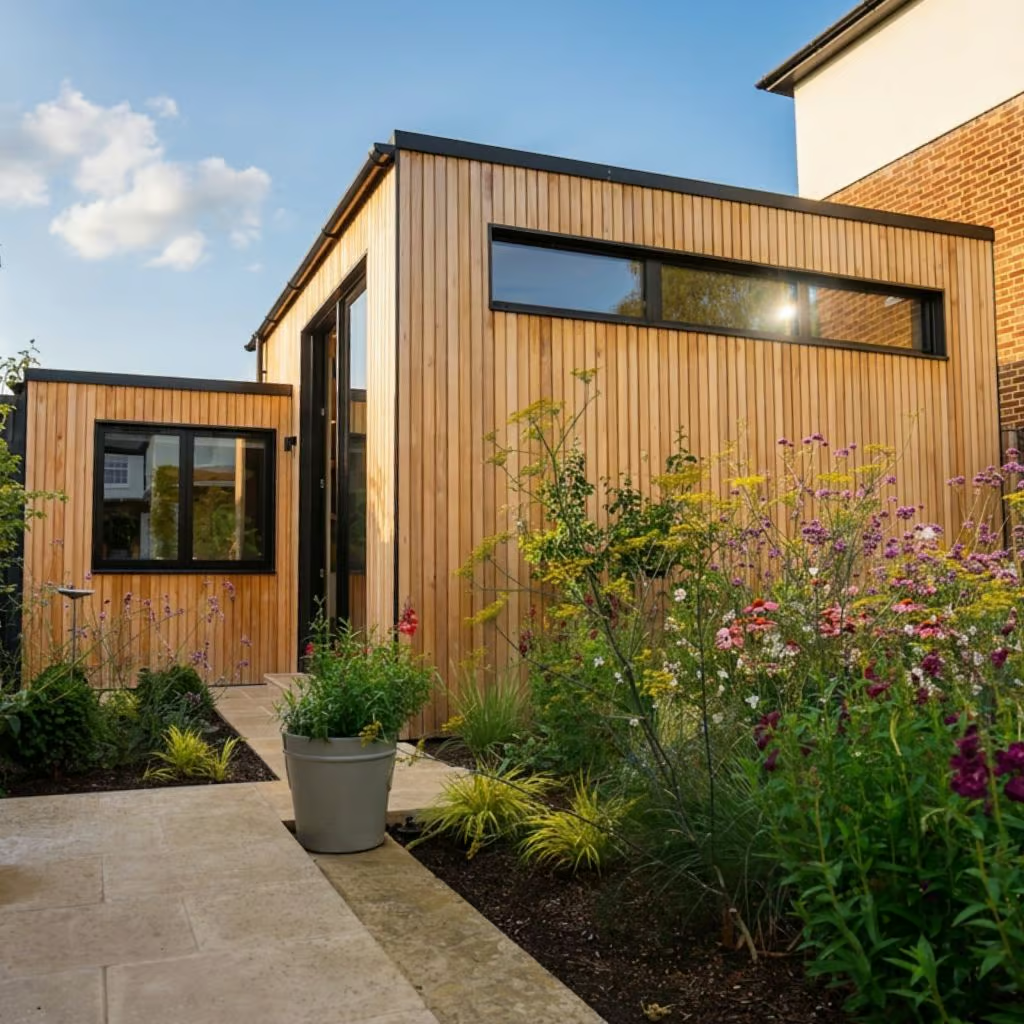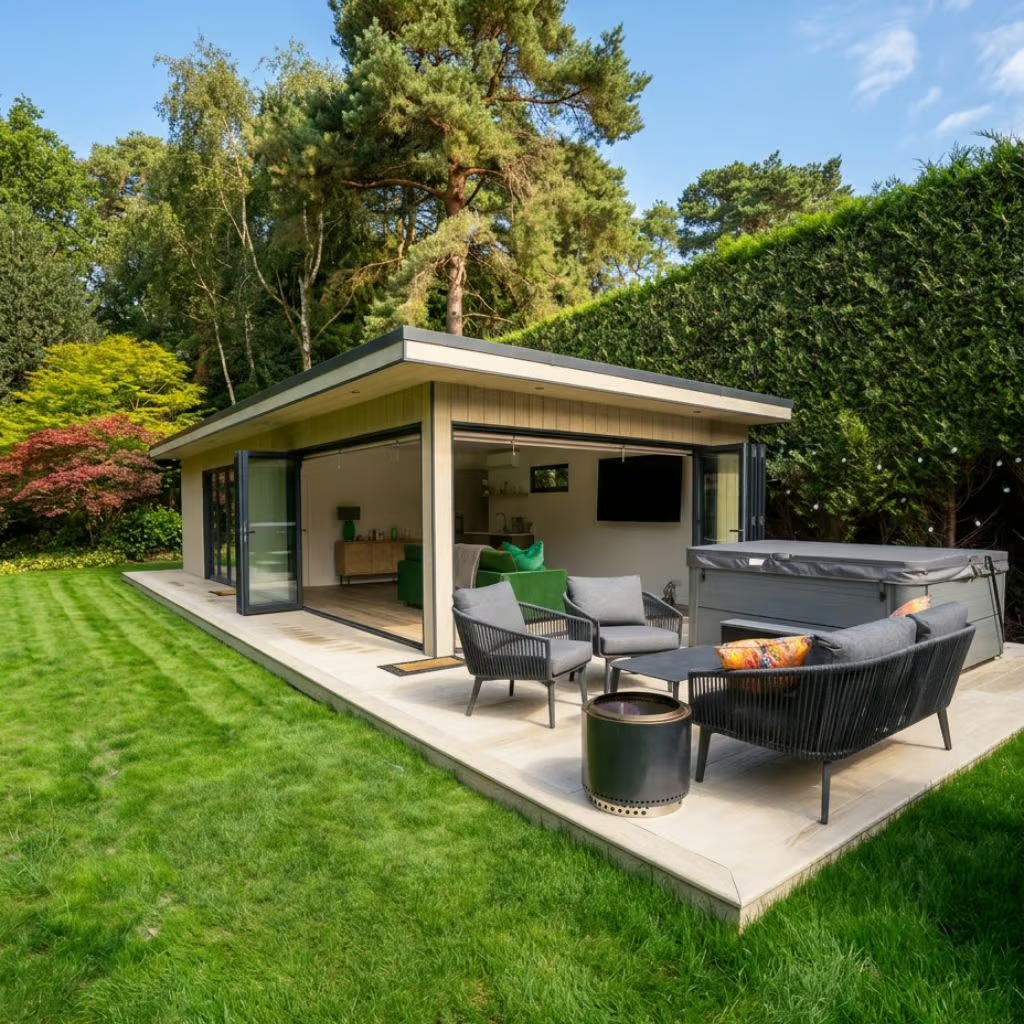
Is this the right season to build a garden room?

A garden room can be built in autumn and winter in the UK, provided the frame and foundation are designed for wet and cold conditions. Steel frames and ground screw foundations are two of the most weather-resilient choices available, because neither relies on dry spells or mild temperatures to perform properly.
Many homeowners assume garden rooms are a spring or summer project. That belief is understandable. Sunshine makes people think about their gardens, and building work feels more natural when the weather is kind. Yet the summer rush often means longer waits, and a room ordered in May may not be ready to use until the evenings are already drawing in.
Starting the process in autumn flips that timeline around. Design, planning checks and manufacturing can all happen while the weather is grey, so the finished room is in place and ready to enjoy long before the first warm days of spring arrive.
This guide explains how cold and wet weather affects different building methods, what to look for in a garden room that will be used all year, and how to plan an installation around the festive period. Whether the goal is a home office, a gym, a studio or a self-contained annex for a family member, the same principles apply.
Why autumn is the moment people need more space
Shorter days push life indoors, and that is when a lack of space at home becomes most obvious. Kitchen tables double as desks, spare rooms fill with exercise equipment, and family members compete for quiet corners.
Home working is a big part of this picture. According to the Office for National Statistics, 28% of working adults in Great Britain were hybrid working between January and March 2025, the highest proportion recorded since the ONS began tracking the pattern. Among people earning £50,000 or more, that figure rose to 45%. For millions of households, a dedicated workspace is no longer a luxury but a daily need, and the need feels sharpest during the darker months.
Weather is the other factor. Met Office long-term averages show October, November and December are the wettest months of the UK year, each bringing roughly 123mm to 127mm of rain. Autumn 2025 was wetter still, with UK rainfall around 20% above the long-term average and a seasonal total of 403.4mm, more than spring and summer combined.
Those figures matter for two reasons. First, they explain why so many people put off building projects until spring. Second, they show why the choice of materials is so important. A garden room built in a UK autumn will almost certainly be rained on during installation, so the real question is not whether it gets wet, but whether getting wet causes any lasting harm.
With the right construction method, it does not. The next sections explain why.


How cold and wet weather affects garden room foundations
Every garden room starts with its foundation, and this is where winter weather causes the most trouble for traditional methods.
Concrete is the most familiar option, but it is sensitive to temperature. Industry guidance from UK suppliers such as Heidelberg Materials states that fresh concrete should be kept at or above 5°C for its first 48 hours to gain enough strength to resist frost. Most specifications also prohibit pouring when the air is below 5°C and falling, and concrete should never be placed on frozen ground. If water in a fresh slab freezes, it expands and can damage the concrete so badly that it has to be broken out and relaid. In practice, a cold snap can delay a concrete base by days or even weeks.
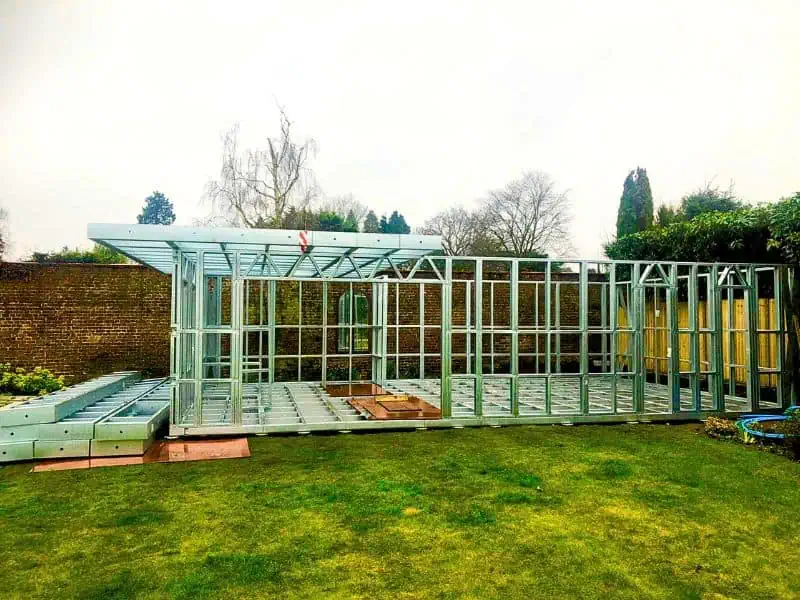
Ground screws work in a completely different way. Each screw is a galvanised steel pile that is driven into the soil, creating an immediate, load-bearing anchor point. Nothing needs to set, cure or dry, so the frame can be fixed in place the same day. Rain makes no difference to the result, and frozen ground does not stop installation either. Hard, cold soil simply takes a little more effort to drive into.
Foundation type | Affected by frost? | Curing time | Can be installed in rain? |
Concrete slab | Yes, must stay above 5°C for 48 hours | Days to weeks | Limited |
Timber bearers on pads | Pads can be; timber absorbs moisture | Pads need curing | Yes, but timber gets wet |
Ground screws | No | None | Yes |
Ground screws also have a lighter environmental footprint. With no excavation and far less concrete, there is minimal disruption to lawns and planting, and the screws can be removed if the room is ever relocated.

The frame is the skeleton of a garden room, and its reaction to moisture determines how the building behaves for decades.
Timber is a natural material that absorbs and releases water. When it gets wet, it swells. As it dries out inside a heated room, it shrinks again, and that movement rarely happens evenly. Research from BRANZ, a building research body, found that a 200mm floor joist installed wet can shrink across the grain by as much as 8mm. That shrinkage opens small gaps between the joists and the floor above, allowing boards to flex and rub. The result is the familiar creak or squeak that many people know from older homes. Shrinkage can also cause twisting, bowing, cracked plaster and doors that no longer close properly.
Rain during construction makes this far more likely. A timber frame left exposed during a wet November week can soak up significant moisture before the roof and walls are sealed, and those effects may only show months later once the heating is switched on.
Steel behaves differently. A galvanised or coated steel frame does not absorb water, so it does not swell, shrink, warp or rot. Getting rained on during installation has no effect on its shape or strength. Floors stay flat and solid, wall lines stay true, and windows and doors stay square in their openings. For anyone building in a UK autumn or winter, that stability removes one of the biggest risks of cold-season construction.
Steel is also non-combustible and is not a food source for insects or fungi, adding to its long-term durability.

Will a garden room be warm enough in winter?
A well-built garden room can be just as comfortable in January as it is in June. Comfort depends on three things working together: insulation, airtightness and a suitable heat source.
Insulation keeps warmth in. Look for insulated floors, walls and roof, rather than insulation in only one or two of these areas. Heat escapes through the weakest point, so a thick roof will not compensate for a thin floor. High-performance double glazing with thermally broken frames makes a noticeable difference too, especially in rooms with large glass doors.
Airtightness stops cold draughts. Carefully sealed joints, quality door and window seals and a properly installed membrane all help the room hold a steady temperature. Good ventilation still matters, because a room that cannot breathe is more prone to condensation in cold weather.
Heating is the final piece. At InFrame, heating is included as standard so every room is ready to use from the first day, whatever the season.
Running costs are often lower than people expect. Under the Ofgem price cap for October to December 2026, the average electricity unit rate is 26.32p per kWh. A 2kW heater running at full power would therefore cost roughly 53p an hour. In a well-insulated room, a thermostat means the heater cycles on and off rather than running constantly, so real-world costs are usually lower. Heat pump air conditioning units are more efficient still, typically producing several units of heat for every unit of electricity used.

Lead times, Christmas and getting ready for spring
Timing a garden room project is mostly about lead times, not weather. Design approval, manufacturing and scheduling all take place before anyone arrives on site, so the earlier a project starts, the more choice there is over installation dates.
InFrame installs all year round, in rain, wind and frost. Typical lead times run from 6 to 12 weeks, which means a room ordered in early autumn can be installed before Christmas. Installations continue up to 23 December, after which the team takes a well-earned break. Work resumes on the first Monday in January, which in 2027 falls on 4 January.
For anyone ordering later in the autumn, a January or February installation is a realistic and practical target. That schedule has a clear advantage: the room is complete, heated and furnished well before spring. Instead of waiting for building work to begin when the weather improves, the space is ready to use the moment the garden comes back to life.
Planning ahead also avoids the spring and summer rush. Demand for garden buildings tends to rise as the weather warms, so homeowners who wait until April often find the best installation slots already taken.
A sensible autumn timeline looks like this:
- Decide how the room will be used and roughly where it will sit.
- Check permitted development rules and any restrictions on the property.
- Finalise the design, size and finishes.
- Confirm an installation date within the 6 to 12 week window.
- Plan furniture, broadband and lighting so the room is ready on handover day.
FAQ's
Can a garden room be installed in the rain?
Yes. Steel frames and ground screw foundations are unaffected by rain, so installation can continue in wet weather without any loss of quality or strength.
Can ground screws be installed in frozen ground?
Yes. Frozen soil takes a little more effort to drive into, but it does not prevent installation. Unlike concrete, ground screws need no curing time and are not damaged by frost.
Why don't steel garden room floors creak?
Creaking is often caused by timber joists shrinking as they dry, which opens small gaps beneath the floor. Timber that gets wet during construction is more likely to shrink later. Steel frames do not absorb moisture, so this problem does not occur.
Is a garden room usable all year round?
Yes, provided it is fully insulated, airtight and heated. InFrame includes heating as standard so rooms are comfortable in every season.
Expert Advice
Thinking about a garden room or annex for next year? Starting now means the hard part is finished while the weather is at its worst. Explore InFrame steel frame garden rooms or get in touch to discuss lead times and installation dates.